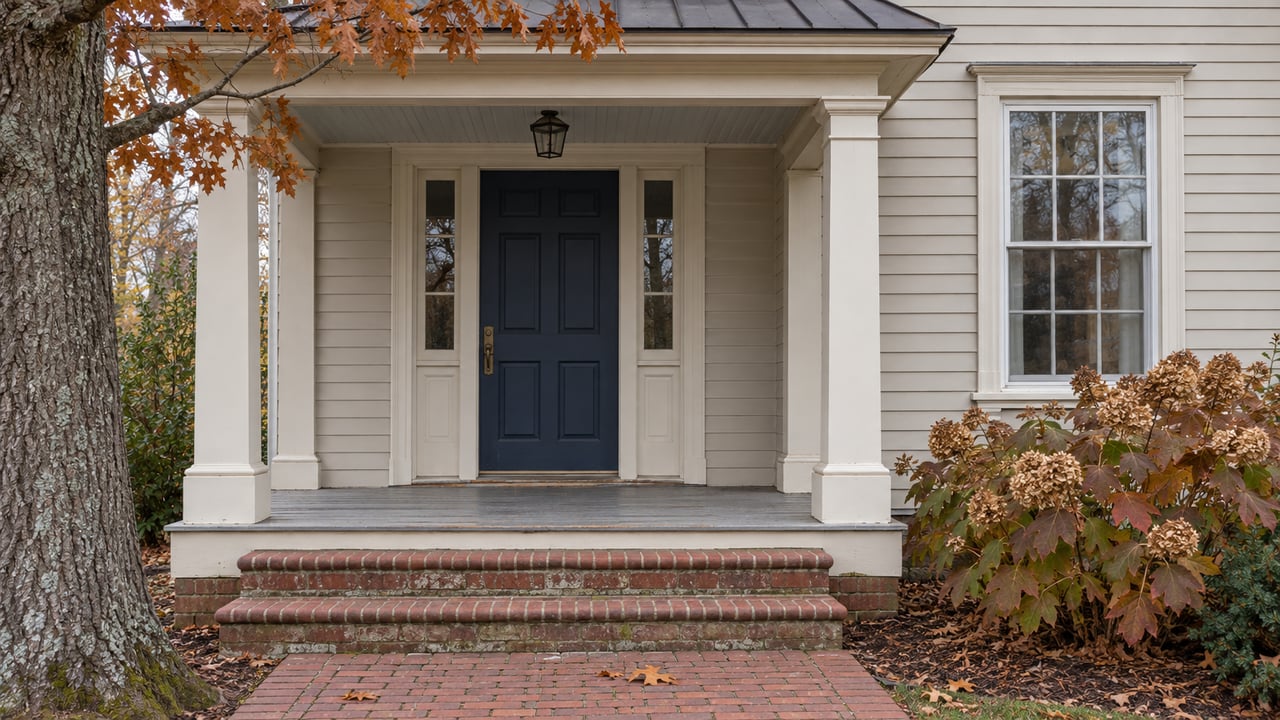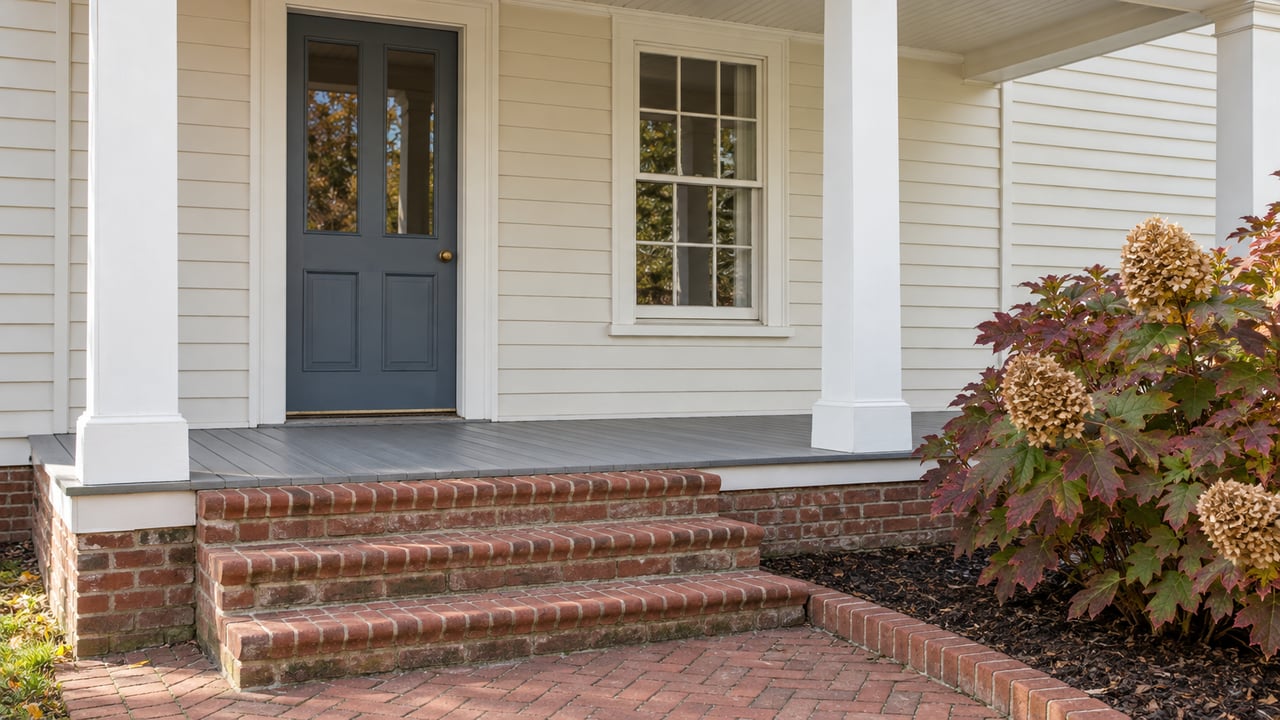
This summer the owner of a house in Cambridge's historic district, built around 1912, started replacing its original wood windows with insulated vinyl units. Four second-story sashes were already out when the City of Cambridge issued a Stop Work Notice, after a citizen let the city know about work underway in the Historic District. City staff asked that the removed sashes stay on site until the Historic Preservation Commission could hear the case.
Next, staff inspected and photographed every window in the house. Of the 17 windows numbered in the staff report for the commission's July 15, 2026 hearing, posted in the city's HPC agenda archive, two were non-historic. Of the historic ones, staff rated one "POOR" and every other one "FAIR." Staff recommended that the four removed sashes be restored and that none of the remaining historic windows be removed. Vinyl would be allowed only for the two non-historic windows, in the house's original 1-over-1 double-hung pattern.
The Review Chart
The commission sorts work into tiers using a review chart. The current version is dated March 30, 2018, and it was included in the agenda packet for the commission's November 4, 2026 meeting.
The chart's lower tiers are administrative review, where staff alone review and approve the work and the filing fee is waived, and the consent agenda, where commissioners can pull an item for full discussion. A regular-agenda item goes to the full commission at a hearing. On the city's HPC application form, the residential filing fee is $50. The 1912 house is listed as a contributing building in the 1990 National Register survey description.
The chart may change. The November 4 agenda scheduled a 5 p.m. workshop on the HPC review chart and flow chart, ahead of the 6 p.m. meeting at Council Chambers, 305 Gay Street.
What Staff Found in the 1912 House
The staff report described the windows' condition. Staff found "Common Sense" decorative sash pulleys, a design patented in 1874, which they took as evidence the windows were likely original to the house. Several ground-floor sashes had interlocking weather stripping, which takes more skill to make. Staff also documented overpainted sash channels, missing hardware, and sill damage.
A Window Survey Discussion
This year the commission discussed a window survey. At its February 18, 2026 meeting, staff presented a draft Window Survey with four classes, ranging from Class I, "No repair needed," to Class IV, "Condition so poor, demolition and replacement in-kind is called for." Commissioners objected to having applicants rate their own windows. Staff offered to inspect the windows and assign the rankings themselves. The commission agreed staff should make the first assessment and kept the right to call for a site visit by commissioners.
The commission also considered a large project. At its April 15, 2026 hearing, the commission voted 6-0 to approve an exterior rehabilitation at 201 Mill Street with conditions. Only the window numbered 56 in the applicant's window survey and the basement windows could be replaced, with wood windows matching the existing ones. Every other window had to be kept and fully restored. Any new storm windows had to have horizontal supports matching the proportions of the existing double-hung windows.
Window work is still coming up regularly. The November 4 agenda listed rear windows at 444 Race Street, a re-roof with substitute material at 325 West End Avenue, and a rooftop solar installation at 315 West End Avenue.
A State Tax Credit for Rehabilitation
The Maryland Historical Trust Homeowner Tax Credit is a state income tax credit equal to 20 percent of eligible rehabilitation expenses, capped at $50,000 in a 24-month period, with a $5,000 minimum in eligible expenses. MHT accepts applications year-round, and review of a complete application typically takes 30 to 45 days.
Cambridge Historic District, Wards I & III, has been on the National Register since September 5, 1990. MHT's Medusa record lists it as NPS reference 90001370 and Maryland Inventory number D-699.
Quick Answers
When does the commission meet? The 2026 agenda archive shows hearings on the third Wednesday of each month. The October 21 meeting was moved to November 4.
If you're weighing an older house in Cambridge's historic district and want to know which of its windows are original before you make an offer, The Linthicum Group can go through the house with you and set up the right conversations with the city early. Contact Us.