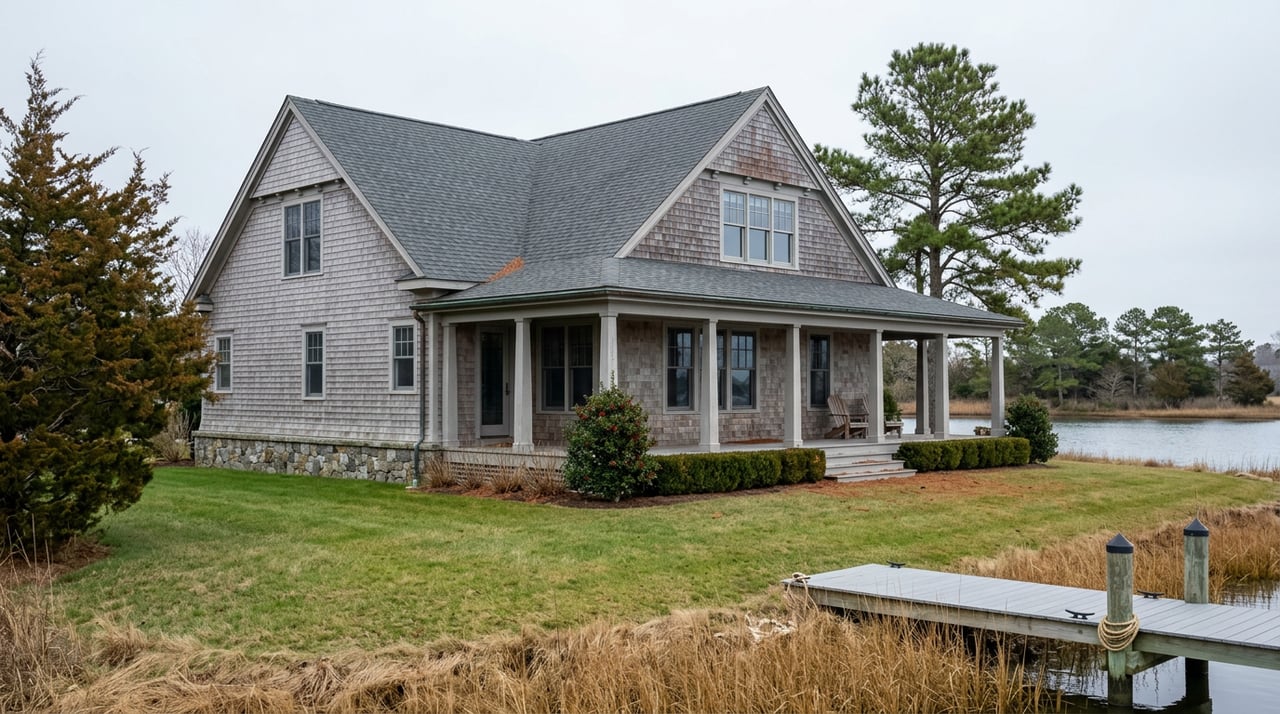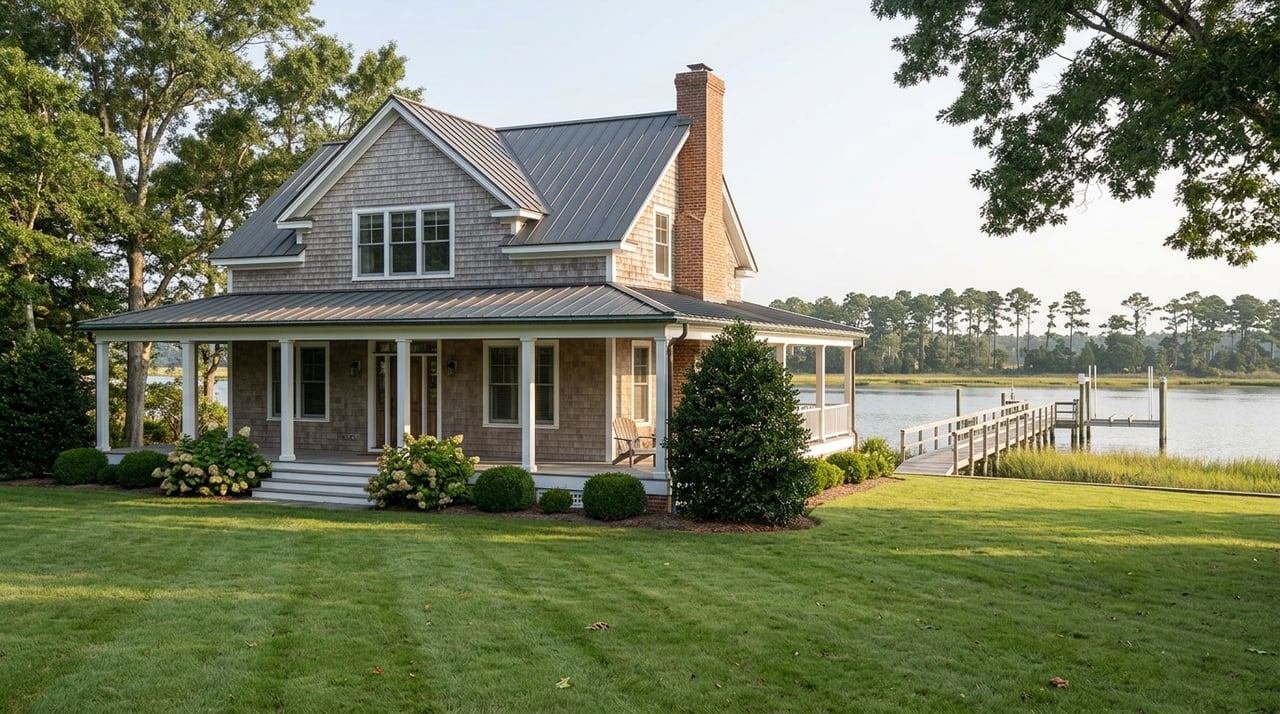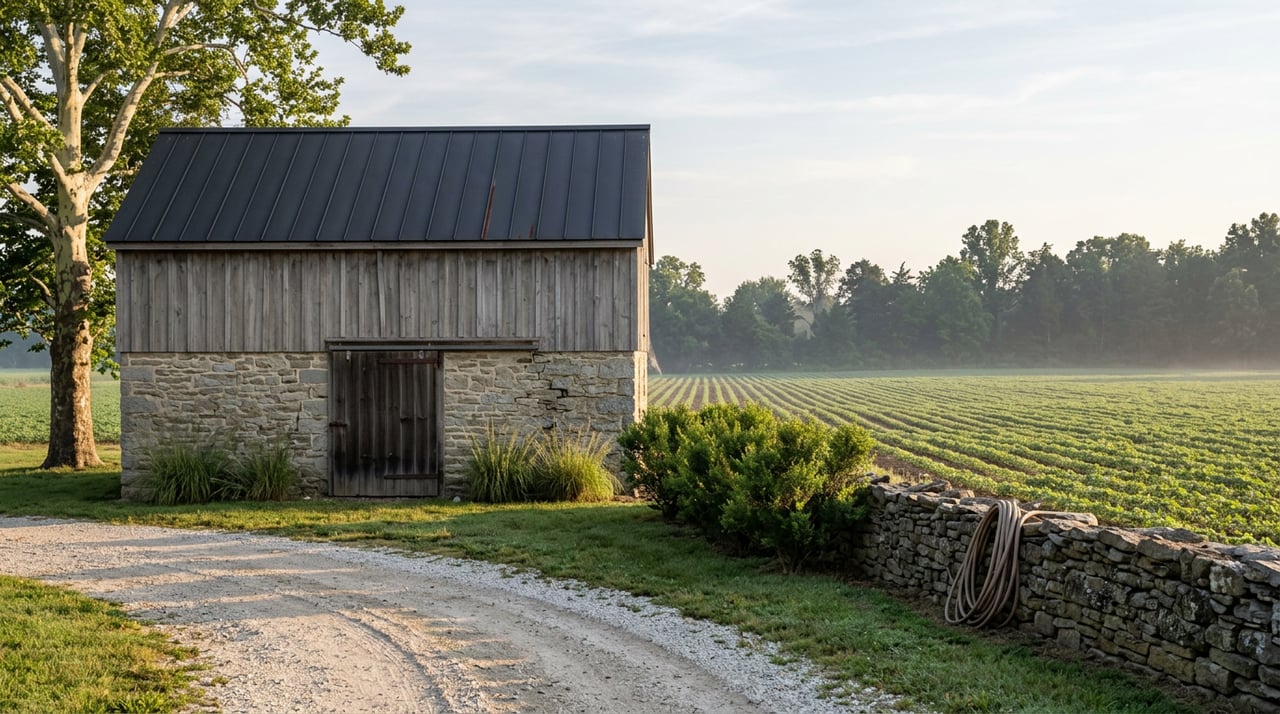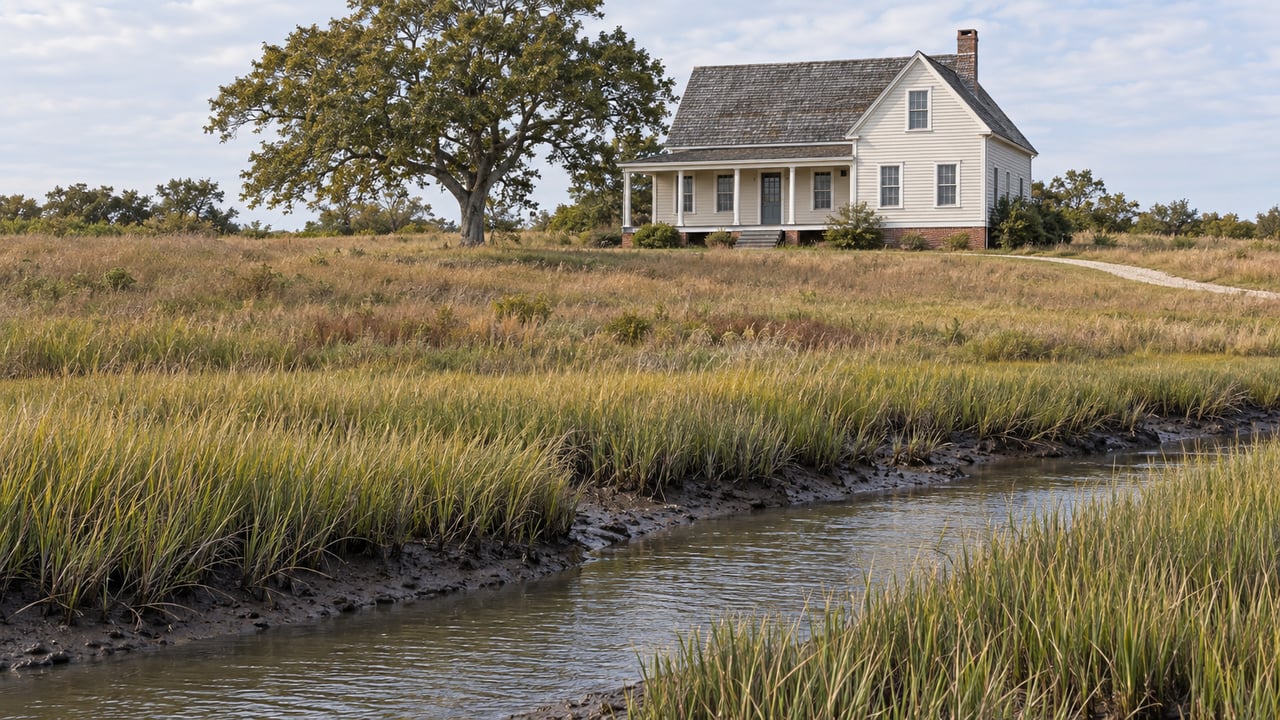
A listing for Parsons Creek Farm outside Cambridge advertises 255 acres at the confluence of Parsons Creek and the Little Choptank River. Another nearby tract along Goose Creek runs about 90 acres of what the listing calls classic lower Eastern Shore tidal marsh ecosystem. A third, a working farm on Marshy Hope Creek, comes in at 113 acres. Three numbers, three farms, and if you are comparing them the way most buyers compare land, by dividing price by acreage, you are comparing three things that are not actually alike.
The acreage on a Dorchester County land listing is a real number. It is also, in most cases, a blend of at least two very different kinds of ground, some of which may be subject to restrictions on construction. Neither of those facts shows up in the headline number. Both of them determine what the property is actually worth to you.
What the Total Acreage Is Actually Counting
Take the Goose Creek tract. The listing breaks its own total down: 12 acres of forested wetlands and 78 acres of brackish marsh, dominated by native grasses and threaded with tidal creeks and guts. That is close to the entire property. It is genuinely valuable ground for sika deer and waterfowl hunting and for crabbing, and the listing markets it that way.
The Marshy Hope Creek farm tells a similar story with different proportions. Of its 113 acres, the listing specifies that approximately 52.6 acres are tillable and farmed for small grain. The rest is described as mature, open acreage, which reads as valuable land in its own right, timber, buffer, frontage, but it is not the same asset as tillable cropland, and it is not automatically buildable acreage either.
Neither listing is misleading. Both disclose the breakdown, which is more than some do. The problem is that a buyer scanning acreage totals across multiple properties, the way you would naturally compare three farms in one afternoon, will treat 90 acres on Goose Creek and 113 acres on Marshy Hope Creek as roughly comparable quantities of usable land. They are not. One is mostly marsh. The other is roughly half tillable. A third property advertised at 260 acres elsewhere in the region is marketed specifically because it has no leases or conservation limitations attached, which only matters as a selling point because so much comparable acreage nearby does.
The Marsh Isn't Wasted Ground, It's Just Not Your Ground to Build On
Tidal marsh and forested wetland acreage carry real value on the Eastern Shore. They are exactly what makes a parcel near Blackwater National Wildlife Refuge attractive to a hunter or a birder in the first place, and one Dorchester listing markets its acreage specifically for its proximity to the refuge and its reputation for excellent hunting. But marsh and wetland acreage sit under a different set of rules than upland does, tied to Chesapeake Bay Critical Area regulations and state wetlands permitting, and those rules are part of what keeps construction off that ground regardless of who owns it.
So when a listing quotes total acreage, you are seeing hunting ground, buffer, and scenery counted in the same figure as buildable upland. That is not a defect in the listing. It is just not the number a buyer should divide by price per acre if what they are trying to price is a homesite, a second structure, or a future subdivision.
The Easement That Doesn't Show Up in the Photos
The second friction is less visible and considerably more permanent. A meaningful share of Eastern Shore farmland, including ground in Dorchester County, is enrolled in the Maryland Agricultural Land Preservation Foundation program, known as MALPF. Caroline County says MALPF, a farmland preservation program, was established in 1977.
The mechanism that catches buyers off guard is the phrase "development right." Anne Arundel County's MALPF easement application instructions define a development right as the maximum number of residential structures legally allowed on the parent tract as of the date the easement application was filed, factoring in zoning, septic law, and Critical Area rules at that time. The Maryland Department of Agriculture explains that MALPF restrictions pass to subsequent owners, whether or not they were told about them clearly at closing. The same program materials say a property under a MALPF easement cannot be subdivided without the Foundation's Board approval.
There is some flexibility built in, but it is narrow. The Maryland State Archives explains that owners who sold an easement after October 2003 could retain one unrestricted lot, which survives a future sale if it was never used, or up to three family lots for the owner and children, which do not survive a sale if left unused.
None of this means a MALPF-encumbered farm is a bad purchase. For a buyer who wants exactly what the program protects, working farmland, hunting ground, open space that will never sprout a subdivision next door, the easement can be a feature rather than a flaw. The issue is that it needs to be priced and understood as what it is before an offer goes in, not discovered afterward. Neighboring Caroline County's program page notes that the state has paid landowners there between $2,000 and $4,000 per acre in recent years for these easements, money paid specifically for the development value that gets stripped from the land. That is the value the state assigns to exactly the thing a buyer might have assumed was still on the table.
Reading Farms Side by Side
Put the two frictions together and the comparison changes. A 255-acre listing like Parsons Creek Farm, marketed with multiple residences and described as a wildlife and waterfowl estate, is worth checking against the deed rather than assuming the listing copy answers what can be built. A 113-acre farm with 52.6 tillable acres is a different kind of asset than a 90-acre tract that is almost entirely brackish marsh, even though both could be priced to look similar per acre. And any tract advertised as having no leases or conservation limitations is making that absence a selling point precisely because it is not the default condition of land in this part of the Eastern Shore.
None of this shows up in a satellite photo. It shows up in the deed, the easement documents recorded against the property, and a straightforward conversation with the county planning office about what is tillable, what is wetland, and what, if anything, has already been signed away.
Questions Worth Asking Before the Acreage Number Sets Your Price
- Ask for a breakdown of tillable, wooded, wetland, and marsh acreage rather than accepting a single total.
- Ask directly whether the property carries a MALPF or other conservation easement, and if so, request the recorded easement document, not just a summary.
- If an easement exists, ask how many residential structures it permits and whether any retained lot options were ever exercised.
- Confirm current zoning and septic approval status for any acreage you intend to build on, since MALPF's own definition of development rights depends on what zoning and septic law allowed at the time the easement was recorded, which may differ from today's rules.
- Have your own title search and survey speak for the property rather than relying on the listing's acreage total as a stand-in for buildable land.
A big acreage number on the Eastern Shore is not a false promise. It is just a total that needs to be unpacked before it becomes a price you are comfortable paying.
If you are comparing farms, hunting ground, or waterfront acreage in Dorchester County and want a clear read on what a specific parcel actually allows before you write an offer, The Linthicum Group has spent years working land and estate transactions across Cambridge and the surrounding Eastern Shore. Contact Us to talk through a property you are considering.
This article is general information, not legal, tax or financial advice. Consult a qualified professional about your situation.