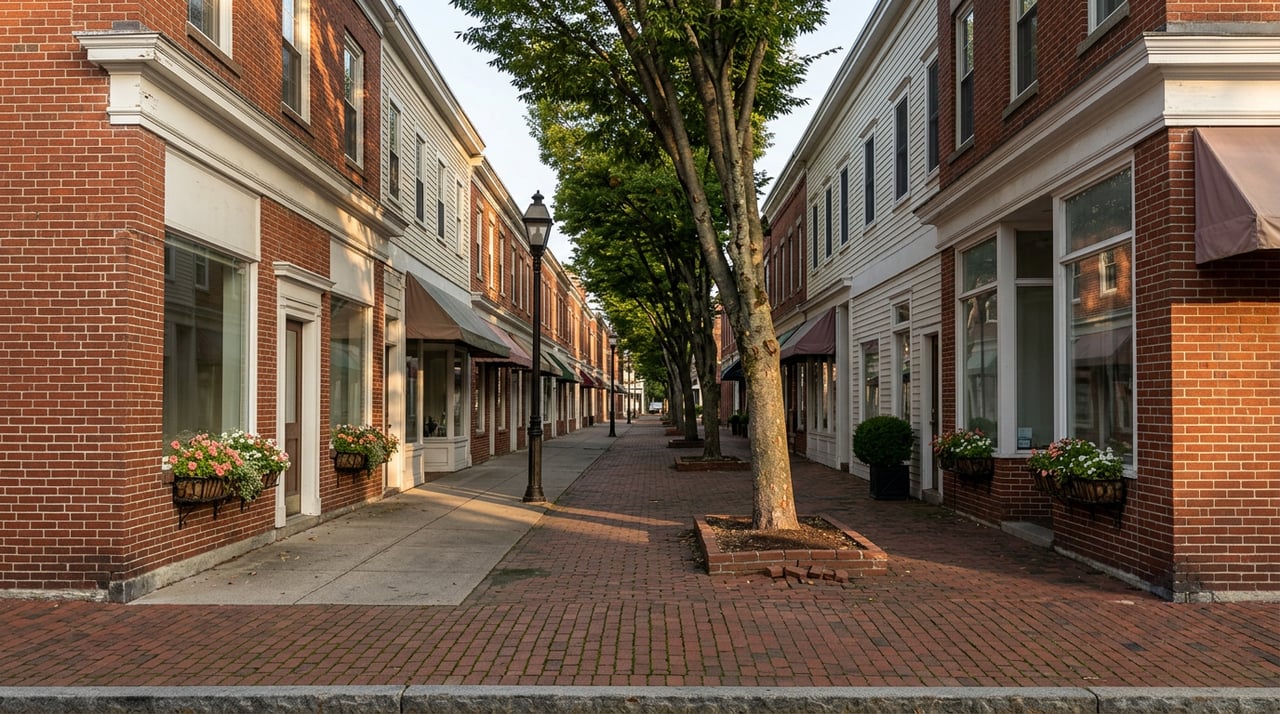
On July 9, 2026, a crowd gathered along Cambridge's waterfront to mark the official opening of a new public promenade, the first physical piece of the long-discussed Cambridge Harbor redevelopment to actually exist. Fireworks had gone off there five days earlier for the Fourth of July. For a city that has talked about redeveloping this 29-acre stretch of shoreline for years, a finished walkway you can stand on felt like proof the project was finally real.
If you're weighing a purchase near downtown Cambridge, or wondering whether now is the moment to sell before the harbor changes the neighborhood, that promenade is probably the image in your head. It's a reasonable one. It's also only part of the story. The organization behind Cambridge Harbor, Cambridge Waterfront Development Inc., has been candid in its own public meetings that the financing behind everything past the promenade is still an open question, not a settled one. Understanding that gap, between what's built and what's still a purchase agreement waiting for a signature, is the difference between pricing in a future that's arriving and pricing in one that's still being negotiated.
What's Actually Finished
Strip away the announcements and here's what actually exists on the ground: the public promenade, opened July 9, 2026, and a plan, not yet built, for a new 1,000-foot family fishing pier. That pier is meant to replace the condemned Bill Burton fishing pier, and the Maryland Department of Natural Resources would be the one building and owning it, not CWDI. It's folded into the harbor's design because DNR asked for it to sit on CWDI property, but it's a state project riding alongside a local one.
Beyond that, CWDI has a broker under contract. The organization signed an agreement with MacKenzie Commercial Real Estate Services in April 2026 to market the site to developers, a firm with prior experience on Waterside Village in Easton and Annapolis Town Center. That's a meaningful step for a project that had been stuck for years, but a signed brokerage agreement is a marketing effort, not a construction timeline.
The Hotel That's "Agreed in Principle"
The closest thing to a live deal is a proposed six-story, 90-room hotel on about three acres of the harbor site, in partnership with Pinnacle Hospitality Group. As of late May 2026, CWDI officials said the purchase and sale agreement had been finalized on CWDI's side and sent to Pinnacle for review, with hopes of completing it within a few weeks. The project has been under discussion for more than a year at that point, with earlier predictions that it would already be done.
That's worth sitting with. A hotel deal that's been "close" for over a year isn't necessarily in trouble, waterfront redevelopment projects with multiple public partners rarely move fast, but it's a useful data point for anyone trying to guess when Cambridge Harbor will start changing what it's like to live or own property nearby. Agreed in principle is not the same as under construction.
The $54 Million Question
Here's the part that gets skipped in most of the coverage. CWDI officials estimate the infrastructure needed to support the hotel and any future residential or commercial development, roads, water and sewer lines, lighting, and drainage, at roughly $54 million. That's not a cost the hotel developer alone is expected to cover. CWDI has been operating on the assumption that Cambridge or Dorchester County would help by creating a tax increment financing district, a TIF, where future tax revenue generated by the new development pays down the infrastructure borrowing over time.
Two things stood in the way of that plan when CWDI's board discussed it in late May 2026. Dorchester County lacked the credit rating it would need because of ongoing delays in its annual financial audits. And the City of Cambridge had not yet approved any TIF authorization. CWDI's own vice president, Tim Crosby, told the board the organization has simply been operating on the assumption that a TIF would come together, which is a different statement than confirming one exists.
This is the mechanism that actually determines when, or whether, the next phase of Cambridge Harbor gets built. Not the renderings. Not the hotel handshake. The infrastructure financing, and specifically whether a county without a current bond rating can stand up a TIF district in a timeframe that matches the optimism in the press releases.
A Land Value That Cuts Both Ways
At that same May 2026 meeting, board member Gavin Nichols argued that future land sales, developer contributions, and tax revenue would eventually cover the infrastructure costs. He estimated the waterfront property CWDI controls could eventually be worth between $35 and $40 million.
That figure is worth reading carefully rather than repeating. It comes from a board member making the case for why the project pencils out, not from an independent appraisal. Board members have every reason to describe their land in its best possible light, especially when they're trying to convince city and county partners to take on financing risk. That doesn't make the number wrong. It makes it a projection with a built-in incentive to be optimistic, which is a different category of fact than a completed sale or a certified assessment.
If you're evaluating what Cambridge Harbor means for property near downtown, the same discipline applies to every number attached to the project. A projected land value from someone pitching the project's viability tells you what that person hopes is true. A completed infrastructure agreement, or a signed hotel deal, tells you what's actually true. Right now, more of the Cambridge Harbor story lives in the first category than the second.
What This Means If You're Watching the Downtown Waterfront
None of this means Cambridge Harbor is stalled or that the enthusiasm around it is misplaced. The city has cleared real hurdles this year, a broker under contract, a public promenade that residents can use today, and a hotel agreement further along than it's been in over a year of discussion. Litigation that had previously delayed the project, according to Mayor Lajan Cephas-Bey, cost the city significant time and resources, and the current pace represents genuine progress against that history.
What it does mean is that the case for buying or selling near downtown Cambridge shouldn't lean on Cambridge Harbor arriving on any particular schedule. The promenade is a real, present-day amenity, a place to walk along the water that didn't exist a year ago, and it adds to the lived experience of the downtown waterfront right now regardless of what happens next. The hotel, the residential components, and the broader mixed-use vision are still contingent on financing questions that the people closest to the project haven't resolved.
If you own property near the harbor and are deciding whether to sell now or wait for the redevelopment to lift value further, the honest answer is that the timeline is genuinely uncertain, not just modest. If you're considering a purchase in the area, the promenade and the public momentum are legitimate reasons to like the location today. They're not yet reasons to pay a premium for a version of downtown Cambridge that doesn't exist yet.
The city council did build in a safeguard worth knowing about either way. Under an agreement modification approved at the council's July 13, 2026 meeting, CWDI must give the public 10 days' notice before signing any term sheet with a developer for property in the waterfront planning envelope, followed by at least 30 days for public comment before anything is finalized. That means the next real signal, a hotel deal that's actually executed, a residential partner that's actually selected, will come with public notice attached. Anyone tracking the harbor's progress can watch the City of Cambridge's news page or CWDI's own board meeting updates and know before the next headline lands.
A Few Questions Worth Asking
Does the harbor project affect property outside downtown Cambridge? The mechanism here, infrastructure financing tied to a specific 29-acre site, is localized. Homes elsewhere in Cambridge aren't directly tied to this timeline.
Is the promenade open to the public now? Yes, it opened July 9, 2026, and is part of the harbor site's public access components.
Who actually decides if the TIF happens? Both the county and the city would need to act, the county to establish the credit standing a TIF typically relies on, and Cambridge to formally authorize the district. As of CWDI's own May 2026 board update, neither step had happened.
Cambridge Harbor is worth watching closely if you have a stake in the downtown waterfront, but it's worth watching as it actually unfolds, not as it's described in the most optimistic version of the story. If you're trying to figure out what a property near downtown Cambridge is worth today, separate from what it might be worth once $54 million in infrastructure gets financed, that's exactly the kind of judgment call The Linthicum Group helps buyers and sellers make. Contact us if you want a straight read on the timing.